Thursday, April 10, 2008

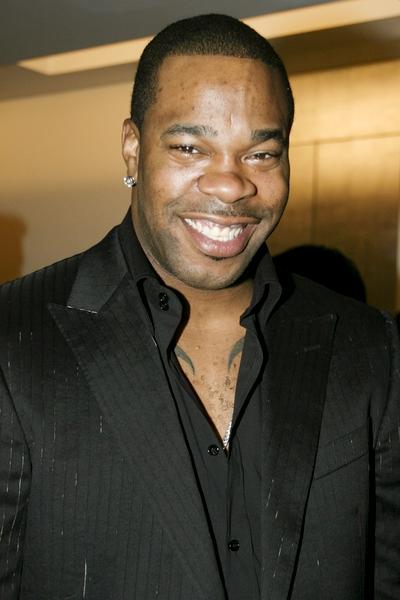
Busta Rhymes Changes LP Title to 'Blessed' and Sets Date

http://blogs.tampabay.com/juice/images/2007/08/07/tbdbusta080807.jpg

Busta Rhymes
© Wild1/PR Photos
will release his eight studio album in mid year and has set the title to be "". The CD, as reported by Rap-Up.com, will be dropped in stores on June 17 with "Don't Touch Me (Throw Da Water on 'Em)" which has been leaked on-line last week, as the lead single.

"Blessed" is the third title proposed for the set because in an interview with MTV in 2006, he had wanted to name it "Before Hell Freezes Over." It was then changed again to "Back on My BS" before settling with simply "Blessed". Its release date has also been frequently changed starting from December last year to early this year.

Busta whose real name is Trevor Tahiem Smith, Jr., has said that he returned working with his past collaborators as well as those whom he never got a chance with. In an interview with RollingStone.com he stated that there will be a piece that he did with . Kardinal Offishall also said that he will be featured in a song that also includes .

Wednesday, April 9, 2008

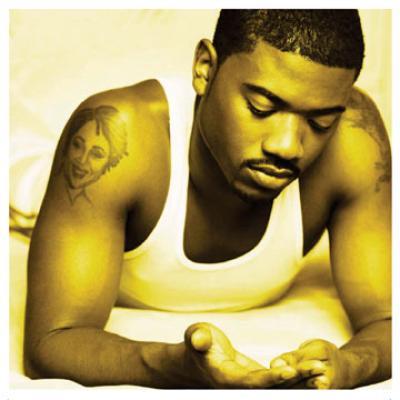
Artist of the Week: Week 15 of 2008 Ray J

http://farm2.static.flickr.com/1395/1373038026_5cc3517d86_o.jpg

Ray J is particularly lucky for being born to a musician's family by the name Willie Norwood. Willie, a relative of Bo Diddley, is a gospel singer who often exposed his children to the art of showbiz, including supporting Ray's older sister Brandy who launched a singing career at the age of mere 2. When William Ray Norwood was born on January 17, 1981, his sister has been cultivated to become a performer. Thus when the family that includes mom Sonja Bates-Norwood, moved from Ray's birth town in McComb, M.S. to Carson, California two years later, it was considered an open opportunity for the children to spread their wings even wider. Ray only started his career at the age of 8, when he auditioned for a number of commercials. Acting soon became his main interest and he got the opportunity to do so when he was cast as comedian Sinbad's son in his TV show. Although the show was eventually canceled in 1996, Ray kept his spirit high by branching to music after inspired by his sister's early success. He recorded several demo tapes that finally landed on the executives' hands of Elektra Records. He was immediately signed in 1995.

Saturday, April 5, 2008

Jennifer Lopez

http://pixhost.eu/avaxhome/avaxhome/2007-10-01/Cover.jpg

Every generation has its share of pop idols that are blessed with great songwriters, catchy hooks and addictive beats and not much else. Jennifer Lopez is one such idol. For almost a decade now, she’s spun off high-gloss pop albums, rife with songs that songs that sound great when you’re playing the car stereo. The fact that those songs sound great has much to do with the songwriting and more likely, the production. Lopez is not a singer of any great value, and you get the feeling that if she were not already a successful actress and dancer, no way she would have gotten a record deal and a lot of her songs would be just as good-if not better-had they been sung by someone else.

While Lopez has certainly had a successful music career, how many people out there actually go into their CD collections and pull out one of her old albums to listen to on purpose? Her music has a temporary appeal that ultimately results in quite a few copies of the Lopez catalog in used bins across the country. As someone who has owned each of her previous five English-language albums at one time or another, I can say that they’re fairly interchangeable. Her first couple of albums had a more pronounced dance/Latin influence, but everything since has had the same fairly disposable vaguely urban sound that positions her as sort of a 21st century Lisa Lisa. Throw some danceable beats together, pay for a couple of recognizable samples maybe add a guest rapper or two, and voila! You have an instant J. Lo album!

She stepped out of her comfort zone earlier this year by making a complete Latin-pop album, and the title of her newest English effort is Brave, so I assumed that this album would be a little different, perhaps more daring vocally or musically. Unfortunately, I was wrong. Brave is more of the same when it comes to Lopez. It’s danceable pop/R&B in the vein of all her previous releases. I guess you could look at that in a good way. She could have gone for the trendy sounds of a Timbaland for this album (the two have worked together before), or gone the simple but popular schoolyard-anthem route favored by Gwen Stefani or Fergie. However, not a lot on this album sticks to the ribs. Lopez’s singing is as bland as ever, and the production doesn’t really pop in the way that previous hit singles like “Waiting For Tonight” and “Get Right” did. While there are a few bright moments interspersed through the album, this might be the weakest effort of Lopez’s career, and that’s saying quite a bit when you consider that 2002’s This Is Me…Then is the only one of her efforts that’s slightly better than average.

In an era when producers like 9th Wonder, Kanye West and Just Blaze are doing new and inventive things with samples, it’s sort of sad to see Lopez still relying on Puffy-style beat jacking for many of the songs on her new album. The first single “Do It Well” pilfers Eddie Kendricks’ over-sampled “Keep on Truckin’”, the intriguingly titled “Hold It Don’t Drop It” lifts sizable chunks from the Tavares disco classic “It Only Takes a Minute”, and “Gotta Be There” swipes it’s title from a Motown-era Michael Jackson classic while also borrowing a good amount from another MJ oldie, “I Wanna Be Where You Are”. So much so that it can almost be considered a duet. If you like this song, it makes better sense to just listen to the original. And this is actually one of the album’s better tracks.

Brave reaches beyond only mediocrity twice over the course of it’s 40 minutes. The opening track “Stay Together” is a peppy throwback dance tune. It could’ve easily been a hit during the late ‘80s/early ‘90s heyday of dance-pop, when acts like The Cover Girls and Seduction were the rage. Oddly, the album’s other standout track is the piano-spiked ballad “Wrong When You’re Gone”. The pretty melody and catchy hook combine to lift this track above the generic remainder of the album.

I’d imagine that you know what to expect if you’re picking up a Jennifer Lopez album, and Brave doesn’t deviate much from her typical pattern. Her thin voice (which sounds more computer-processed than usual on this album) doesn’t have much in the way of character, leaving the song to rise and fall based on their amount of musical ear candy. Lyrically, you’re not getting much beyond the typical love song (the rock-etched “Mile in These Shoes” can be classified as semi-autobiographical and completely embarrassing), and there’s not even an interesting guest appearance to be had (Ludacris, the album’s only guest performer, obviously had a paycheck and only a paycheck on his mind when he phoned in a rhyme on “Do It Well”’s remix). Great pop artists, think Madonna, Janet or even Christina and Justin, have enough personality to elevate their music past the level of fluff, and when that fails them, they get saved by ace production. Brave has neither a strong artistic personality nor boffo production, and as a result, ends up being just another disposable pop record with no redeeming value.

Friday, April 4, 2008

Confessions Usher

http://www.novastar.dk/pictures/usher.jpg

{^Confessions}' most detracting factor is its length. At an hour in duration, it could be stripped of five songs and be far more powerful, especially since no one would have to do any wading to get to the meaty parts. On the other side of the coin, the smartest move {$Usher} makes here is in allowing the {$Lil Jon}-produced {&"Yeah!"} to take its rightful place as the only club track; any attempt at doing something stylistically similar would've failed miserably in its presence. {&"Yeah!"}'s crunk-meets-{\R&B} foundation, featuring an instantly addictive eight-note keyboard vamp and one of {$Usher}'s most muscular turns, is so absorbing that {$Ludacris}' 1500th guest verse floats by with little notice. The following {&"Throwback,"} produced by {$Just Blaze}, sounds like it was made for the sole purpose of trailing {$Alicia Keys}' {&"You Don't Know My Name."} Like that hit, {&"Throwback"}'s sensitively treated {\soul} sample provides a nostalgic tint that complements the wistful, regret-filled tone of the lyrics. A small batch of {$Jam & Lewis} productions, including the effortlessly gliding {&"Truth Hurts,"} continue to help raise {$Usher}'s loverman stock. Another pair -- the upbeat {&"Caught Up"} and the aptly titled {&"Burn"} -- also rate as some of the vocalist's best moments yet. He's been doing this for ten years now. Numerous chart hits have spun off each of his albums. Needless to say, the time is right for the phrase "just another" to be banned from use when discussing him. ~ Andy Kellman, All Music Guide

Thursday, April 3, 2008

Cormac Kenevey Art Of Dreaming

Picture of: Art Of Dreaming


Ireland's contribution to jazz has been somewhat slender over the years (please, no letters – it has!) so the recent emergence of Dublin-born crooner Cormac Kenevey delights as much as it surprises.

Kenevey's second album shows he's no mere flash in the pan and comes with the added imprimatur of appearing on Alan Bates' Candid Records, home to new jazz celebs Jamie Cullum, Clare Teal and Stacey Kent.

The Art Of Dreaming is as smooth as a glass of 16-year-aged Three Wood Bushmills whiskey and deports itself with a knowing confidence and under-stated élan that, for the most part, persuades.

Kenevey trips himself up on a couple of occasions where youthful enthusiasm bests musical judgement. So you might want to bypass the bizarre beat-box tribute to electronic pop duo Moloko and fast-forward through Kenevey's own In The Extraoutosphere, which falls way short of its target despite trying a touch too hard.

Reservations noted, that still leaves 11 other tracks on which Kenevey puts his lyrical, soft-edged, late-night tenor voice to accomplished use. There's a fleet-footed version of Jerome Kern and Dorothy Fields' The Way You Look Tonight (complete with fine tenor sax solo by Michael Buckley) and a couple of delightfully woozy lovelorn laments in Lerner and Loewe's I've Grown Accustomed to Her Face and, underpinned by a 4am-in-the-morning piano line from Phil Ware, Sammy Cahn's I Fall in Love Too Easily.

Opening track Relax puts Kenevey's own lyrics on top of a Bill Pitman guitar solo and transforms it into a winning signature tune in waiting courtesy of impeccable backing from Ware, Kevin Brady on drums, Dave Redmond on double bass and guitarist Hugh Buckley.

Elsewhere Kenevey confirms his growing reputation as a stylish and agile vocalist with a firm sense of tradition, a willingness to incorporate the new and brimming over with potential and the promise of great things to come.


Tuesday, April 1, 2008

Britney Spears BLACKOUT Album Review

Britney Spears hot pics


What joy! Britney's new album will drop next week, and ever since it's been announced, confirmed and then confirmed again that well, yes, there is such a thing as a new Britney album (her first studio work since she released "In the Zone" in 2003) we've been hit with wave after wave of speculation that invariably centered around one thing: how bad or how extraordinarily good this piece of Britney will be.

One thing was clear from the beginning: under the current circumstances, a Britney album could only be qualified in extreme (and extremist) terms – but thankfully, not as a "make or break" piece. No, that part of the saga is behind us, for sure. There's no more naïve wondering about Britney making a comeback, no more speculations in that department, no more fingers crossed, no more "you show them, Britney, you can do it!"

That childish curiosity and unexplained desire to see Britney Spears, THE Britney Spears prove to the world she's still a star died inside our still-struggling hearts while Britney was going through her drug-fueled, hypnotized dance routine at the VMAs. The Britney of my childhood, the energetic, cute teenager struggling with the pains of maturity and teenage love, all that is over.

We now have adult Britney on our hands, and there's just about as much romance in her life as in a Die Hard movie. At the end of that tunnel of hope from which we've all emerged, beaten and bruised, there are only hard facts left. One of them is that Britney Spears will drop an album next Tuesday. It's a fact of life we have to deal with from a perspective that has to stay professional, cold and to the point. And if we look at "Blackout" from that point of view, without the

background divorce and custody battle drama, without thinking of the life that once pulsated through Britney's drug-free, toned body and the spark that stayed in her eyes and made up for her not-so-amazing vocal abilities, all we have left is an empty shell.

"Blackout" is not mature, it is empty. There is no Britney in it, no trace of any learning curve, no clue that the child Britney is now all grown up and back with an electrifying, if a little darker new album. It's a commercial, over-produced piece that showers us in pulsating club beats overlaid with layers of icy synthesizers and breathy, heavily processed vocals. It's said to be mature – but it sounds like it's searching for something, a balance between what's left of Britney's musical self-confidence and a desire to drown the memory of her previous false steps under a facade of defiance.

This new, "in your face" Britney tries to find some sort of justification for the flesh-and-bone Britney's transparent sexuality and series of blunders, but all she achieves is some rather suggestive panting through a web of palpitating beats, distorted noises and sharp synthesizers. You want club cliches? You got them. You want cold, sharp beats? You got them. And the so-called revelations that speak of personal drama, break-up and being a parent only manage to make Britney appear even more ridiculous when put next to the cold, hard facts of her everyday existence.

If there is one thing that "Blackout" can't deny, it's the fact that Britney's personal life and drama and her music prowess (or lack thereof) can't be forced into providing justifications for one another, for the simple reason that there is no trace of Britney – the song writer on the whole album. And when I say "no trace" I don't mean her writing some lyrics here and there, I mean her making sure that there is a connection between her essence, her true nature behind the distorted pictures we see everyday in the gossip columns, and her music.

And since this connection in non-existent, such lyrics as "I’m Miss bad media karma / Another day another drama / Guess I can’t see no harm / In working and being a mama / And with a kid on my arm / I’m still an exception / And you want a piece of me" (Piece of Me) only make us wonder "where did that come from?" There is a major clash between someone's desire to portray Britney as a hard-working mother and her aimless daily cruising through L.A. With a pack of paparazzi in tow. As I said, there is no mutual justification between her music and her life, just a smokescreen and an "in your face" Avril Lavigne kind of attitude that, while it can't provide any excuses, exposes Britney even more to public ridicule.

I'm sure Britney's fans will find no fault in the album. It's very difficult to judge the album and Britney's life separately, but this is exactly what we should all try to do: draw the line between the woman and the (former) professional, and start out musical explorations of "Blackout" from there. The result will be heartbreaking – you might find yourselves choking at some point while listening to songs like "Radar" or the shamelessly suggestive "Perfect Lover" or the album's down-tempo number "Why Should I Be Sad" which is aimed at being self-reflective but ends up showing us a sad, disoriented Britney that's in search of a place to hide rather than a place to gather her energy and shoot to legitimate fame again.

Sunday, March 30, 2008

Janet Jackson - Dicipline


despite any suspicions that the title of Janet Jackson's new album, Discipline, might be referring to the secret behind the singer's recent weight loss, the single-word designation was encouraging for those who prefer Janet taking control and cracking the whip (both as leader of her Rhythm Nation and the boss of her bedroom) over the vapid, single-girl come-ons of her last three albums. Disappointingly, the title track doesn't hark back to the self-empowerment of Control, but rather the S&M of The Velvet Rope. Lyrics like "I touched myself/Even though you told me not to" and "Daddy, I disobeyed ya/Now I want you to come punish me" invite all kinds of psychoanalysis that only grow more disturbing when you remember who her daddy really is, which would be fascinating if she hadn't already written the sexier (and less creepy) "Rope Burn." Velvet Rope was Janet's finest statement as an artist in that it found her internalizing the political, but simply rehashing her deep-seeded desire to be dominated isn't a step forward.

And moving forward is exactly what Janet hasn't been able to do, at least creatively, since she split with covert co-writer/hubby René Elizondo Jr. The fact that she got dumb on All For You over the prospect of finding new dick was excusable, but Damita Jo, her first record after shacking up with Jermaine Dupri and exposing her star-shaped hardware to 90 million people, wasn't exactly the examination of identity and media that it should have been. The woman who once accused Madonna of having no class has spent a decade and a half telling us how, when, where, and by whom she likes to get her pussy eaten. ("The Meaning"—an interlude in the vein of Velvet Rope's "Speaker Phone," in which she forced a friend to listen to her masturbate—literally finds Janet reading from a dictionary while pleasuring herself.)

Janet's second favorite pastime, of course, is dancing, and the suspicion that her interest in nonsexual themes might have been outsourced was hinted at nearly two decades ago when she followed up the trio of socially-conscious tunes that were to ostensibly set the tone for Rhythm Nation with: "Get the point? Good. Now let's dance." (As if you couldn't get the point while dancing, but I digress.) Discipline does address some of the problems with her last few albums: Lead single "Feedback" is only a notch above 2004's "All Nite (Don't Stop)," but it possesses all the lyrical sass and club-affability that was promised with 2006's 20 Y.O. and is thus somewhat of a comeback for Janet. Jimmy Jam and Terry Lewis's absence (for the first time since Control) is, not surprisingly, a non-issue; aside from a track or two, they haven't really produced anything inspired for their biggest client since the 1990s.

A slew of big-name producers, both new and old, fill in for Jam and Lewis, including Dupri, Rodney Jerkins, Stargate, The-Dream, and Tricky Stewart. As usual, Dupri's contributions are a mix of pleasant surprises and disappointments: Last time out, JD gave his girlfriend an '80s freestyle track to call her own ("Get It Out Me"); here, he offers up a slice of spacey Euro-disco with "Rock With U," co-penned by Ne-Yo. The slow jam "Never Letchu Go," however, is like an '80s power ballad without the power—and with two garish soap-opera guitar solos. Janet has delegated all songwriting responsibilities, but the results aren't any kind of marked improvement, consisting of bits of wisdom like, "Strobe lights make everything…sexier." Really, Ne-Yo? They usually just give me a headache. Questionable lyrics like "Hoo-ooo, make me cry" aside, the title track, also co-written by Ne-Yo, does boast some interesting vocal arrangements, making it one of Janet's most successful sex ballads in years.

If one were to try to identify some kind of evolution in Janet's latest bout of dirty talk, it might be sex with robots. Throughout the album, she talks to and interacts with a rather compassionate computer DJ named Kyoko, and her voice is robotic and synthetic on tracks like "Feedback" and the Daft Punk-sampling "So Much Betta"—not necessarily such a bad thing for an artist whose vocals often consist of unintelligible murmuring to begin with. At 22 tracks, Discipline is anything but disciplined, but it's also Janet's most cohesive album in a while. Just don't call it a comeback—at least not until she reunites with her "greatest ex."